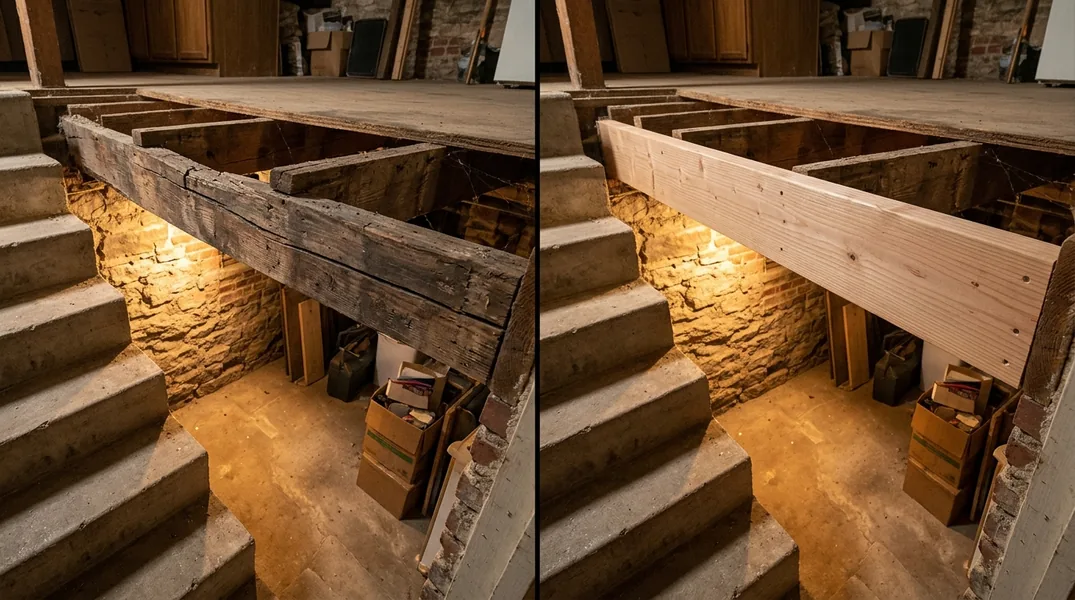
Why Is My Floor Sagging? Common Causes in Older Aurora Homes
If you've noticed your hardwood floors dipping or feeling soft underfoot, you're not alone. Sagging floors are one of the most common structural complaints we hear from homeowners in Aurora, especially those living in homes built before the 1980s. The culprit is almost always deterioration of the wooden support system beneath your feet, and understanding the root cause is the first step toward fixing it properly.
The most frequent cause of sagging floors is Wood Rot & Dry Rot Repair issues in floor joists and beams. Wood rot thrives in damp environments, and older homes often have moisture intrusion problems from foundation cracks, poor drainage, or aging plumbing. When moisture seeps into the wood framing, it creates the perfect breeding ground for fungal decay. Over time, the wood loses its structural integrity, and the floor above begins to sag. Dry rot is particularly insidious because it can spread rapidly through wood, consuming the cellulose and leaving behind a weakened, crumbly structure that can no longer support the weight of your home.
Another major culprit is Termite Damage Repair needs. Termites have been destroying homes in Illinois for centuries, and they're especially drawn to the wooden joists and beams that form the skeleton of your house. Unlike rot, which spreads through moisture, termites actively consume wood fiber by fiber. A termite infestation can go unnoticed for years, silently weakening your floor joists until suddenly the floor feels bouncy or soft. If you've spotted termite mud tubes, droppings, or wings, sagging floors may already be a sign of advanced damage.
Understanding Floor Joist Repair and Sistering Floor Joists
When a structural engineer or carpenter inspects your sagging floor, they're evaluating the condition of your floor joists, which are the horizontal wooden beams that run perpendicular to your floorboards and bear the weight of everything above them. Floor Joist & Subfloor Repair is often the solution, but the specific method depends on how much damage has occurred and how much load the joist still needs to carry.
One of the most popular and effective repair methods is called sistering floor joists. This technique involves fastening a new or reinforced wooden beam (called a sister joist) directly alongside the damaged or weakened original joist. The sister joist is typically bolted or nailed to the original joist along its entire length, creating a stronger composite beam that can redistribute the load. Sistering is ideal when the damage is moderate, the joist is still partially sound, and you want to preserve the original structure while adding support. The beauty of sistering is that it's less invasive than full joist replacement and often costs significantly less, making it an attractive option for budget-conscious homeowners.
However, if the joist is severely rotted, termite-damaged, or cracked, sistering alone may not be sufficient. In these cases, full Floor Joist & Subfloor Repair or replacement becomes necessary. This involves removing the damaged joist entirely and installing a new one that meets current building codes. If the damage extends to multiple joists or affects a load-bearing beam, you may need Beam Replacement & Load-Bearing Wall Removal services to ensure your home remains structurally sound and safe.
Sagging Floor Repair Cost in Aurora: What to Budget
The pricing for sagging floor repairs varies widely depending on the extent of damage, the number of joists affected, and the repair method chosen. Homeowners often ask us for ballpark figures, and the honest answer is that every home is different. A simple sistering job on one or two joists might cost between $1,500 and $3,500, while full joist replacement for multiple damaged beams can easily exceed $5,000 to $10,000 or more. These figures are rough estimates and can vary based on local labor rates, material costs, and the complexity of accessing the damaged framing.
Several factors influence the final cost of your repair. First, the accessibility of the damaged area matters tremendously. If the joists are in a basement or crawl space with good clearance, the repair is faster and cheaper. If they're buried under a finished floor or in a tight attic space, labor costs climb. Second, the extent of rot or termite damage determines whether sistering will suffice or if full replacement is necessary. Third, any accompanying work like treating for active termites, addressing moisture sources, or installing vapor barriers adds to the overall cost. Finally, if the damage affects load-bearing beams or requires temporary support structures during repair, costs increase substantially.
The best way to get an accurate number for your specific situation is to schedule a free estimate with a qualified carpenter. Aurora Carpentry provides detailed inspections and transparent quotes so you understand exactly what work is needed and what it will cost. Call us at (815) 916-4993 to arrange an inspection.
How to Spot Sagging Floors Before They Become Dangerous
Early detection of floor sagging can save you thousands of dollars in repairs and prevent safety hazards. Many homeowners don't notice a problem until someone comments that their floor feels 'bouncy' or they spot a visible dip in the hardwood. By that point, the structural damage is often well advanced. Learning to spot the warning signs can help you catch problems while they're still manageable.
The most obvious sign is a visible sag or dip in the floor, especially noticeable when you look along the length of hardwood flooring from a low angle. You might also notice doors that no longer close properly, cracks appearing in drywall or plaster, or a musty smell in the basement or crawl space. Soft or spongy spots when you walk across the floor are a red flag. Some homeowners notice squeaking or movement underfoot, or they see visible mold or water stains on the subfloor or joists when they venture into the crawl space. If your home is older and you've experienced water intrusion, foundation issues, or you suspect termite activity, it's worth having a professional inspection even if you haven't noticed sagging yet.
In Aurora, where many homes date back decades, regular inspections are a smart investment. A professional can identify rot, termite damage, or structural weakening before it becomes severe enough to cause noticeable sagging. Early intervention often means simpler, less expensive repairs.
The Repair Process: What to Expect When Your Floors Are Fixed
Understanding the repair timeline and process can help you prepare for the work ahead. Most sagging floor repairs require access to the underside of your home, which means work in the basement, crawl space, or under the house. If you have a finished basement, some flooring may need to be temporarily removed or protected. The first step is always a thorough inspection to confirm the extent of damage and determine the best repair approach.
Once the scope is clear, the carpenter will typically install temporary support posts or beams to carry the weight of the floor while the damaged joists are being repaired or replaced. This temporary bracing is crucial for safety and prevents further sagging during work. If sistering is the solution, new joists are bolted alongside the damaged ones. If replacement is necessary, the old joist is carefully removed and a new one installed, often in sections if the joist is very long. Throughout the process, the work is inspected to ensure it meets building codes and structural standards.
The entire repair can take anywhere from a few days to several weeks, depending on the scope. Once the structural repairs are complete, any moisture issues are addressed, and the temporary supports are removed. Your floor should feel solid and level again. Aurora Carpentry handles every step of the process with care and professionalism, keeping disruption to your home to a minimum.
When to Call a Professional: Floor Joist Repair Near Me
If you suspect your floor is sagging, don't wait. Structural problems only worsen over time, and what starts as a minor sag can eventually become dangerous. A floor that feels unstable or looks visibly dipped is already showing signs of advanced deterioration. Attempting DIY repairs on structural elements is not recommended, as mistakes can compromise your home's safety and may not pass building inspections if you ever sell.
A qualified carpenter or structural engineer can assess the damage, determine whether sistering floor joists or full replacement is needed, and ensure the work meets local building codes. They'll also identify and address the underlying cause of the problem, whether that's moisture intrusion, termite damage, or poor ventilation in a crawl space. Without fixing the root cause, your repairs won't last.
If you're in Aurora and you've noticed sagging floors, soft spots, or structural concerns, contact Aurora Carpentry today. We specialize in floor joist repair and have helped hundreds of local homeowners restore the structural integrity of their homes. Call us at (815) 916-4993 or request a free estimate to get started. We'll give you an honest assessment and a clear plan to fix your floors safely and affordably.
Looking for a professional carpentry contractor in Aurora? Aurora Carpentry responds fast for all your carpentry needs.
Get a Free QuoteOur services: Wood Rot & Dry Rot Repair · Termite Damage Repair · Floor Joist & Subfloor Repair