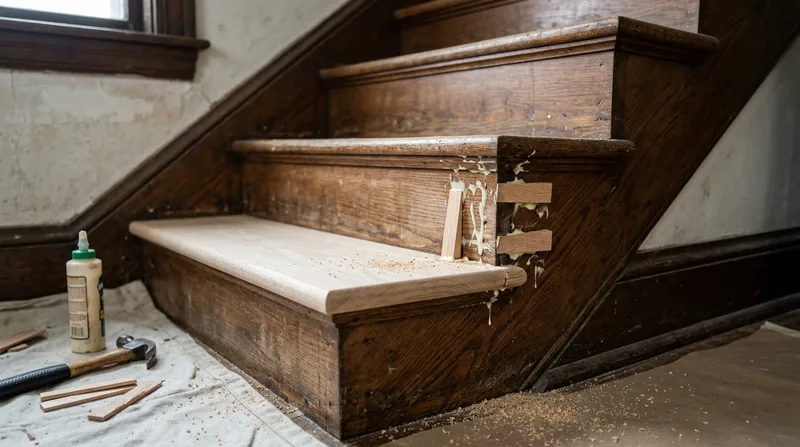




Squeaky treads, loose banisters and worn stringers are routine in Aurora's Tanner and Pigeon Hill houses, where Victorian and Craftsman homes sit on the Fox River plain with century-old wood that moves with every freeze-thaw cycle. Newer builds loosen too as the wood dries out each winter and humidity spikes in summer. Stair and railing repair in Aurora keeps these transitions safe, quiet and period-correct, whether you live in a restored 1890s Queen Anne above the river, a 1920s brick bungalow on the West Side, or a 1990s two-story in Stonebridge. We quiet treads, secure newels, restore period railings and install code-compliant handrails, working with the grain of your home rather than against it. Call us at (815) 916-4993 for a free estimate, or read on to understand what loose stairs cost and why they matter.
Why Stair and Railing Repair Matters in Aurora's Older Homes
Aurora's residential stock spans 170 years, from hand-hewn joinery in 1850s Italianates to modern engineered lumber. Stairs in older homes were built with solid-sawn wood that shrinks as it ages, creating gaps between treads and stringers. The freeze-thaw cycles of Aurora winters, combined with indoor heating that dries wood further, accelerate this movement. Loose stairs aren't just annoying, they accelerate wear and create a safety hazard over time. Railings loosen for the same reason, and a wobbly baluster or newel post can fail under body weight. Addressing these issues early prevents more costly structural repairs down the line.
- We identify the root cause of movement, whether wood shrinkage, fastener failure or structural settling.
- We re-secure treads to stringers using traditional techniques that respect the original joinery and wood species.
- We repair or replace balusters and newel posts without replacing the entire railing system.
- We install modern code-compliant handrails that blend with period railings or stand on their own.
- We quiet squeaks by addressing the gap between tread and stringer, not by adding fasteners that mask the problem.
These repairs keep your staircase functional and safe for decades to come.
Key info: Many Aurora homeowners with stairs in Pigeon Hill, Riddle Highlands or the Tanner Historic District find that loose treads and railings appear within 5 to 10 years of moving in, even if the stairs seemed solid at inspection. This is normal wood behavior in our climate and does not indicate poor construction. We repair it, not replace it, whenever the wood structure is sound.
For more on how wood behaves in Aurora's climate, see our guide to wood rot and dry rot repair, which often accompanies stair issues in homes with moisture problems.
How We Repair Stairs and Railings in Aurora
We start with a walk-through to identify which parts move, where the squeaks come from and whether the underlying structure is sound. We test the stringer for rot or damage, check the fastening system and assess the baluster and newel condition. Once we understand the pathology, we propose a repair plan that may involve re-securing fasteners, shimming gaps, replacing individual balusters or tightening the newel post. We work methodically and explain what we're doing as we go, so you understand why the stairs were loose and what we've done to fix them.
- We inspect the staircase from top to bottom, checking treads, stringers, balusters, newels and handrails for movement and damage.
- We identify loose fasteners, gaps between components or structural issues that cause squeaking or movement.
- We remove the handrail if needed to access the baluster assembly and newel post connection.
- We re-secure treads and stringers using fastening techniques appropriate to the original construction method and wood species.
- We repair or replace damaged balusters and tighten the newel post at both the top and bottom of the run.
- We reinstall the handrail, test all components for movement and make final adjustments.
The entire process respects the original design and materials of your staircase.
Local example: A 1905 Craftsman home in North Aurora had a main staircase with Douglas fir stringers and oak treads that squeaked on the third and fifth steps. The treads had shrunk away from the stringers, creating a gap that allowed movement. We re-secured the treads using original fastening methods and added shims to eliminate the gap, restoring the staircase to silence and stability without replacing any wood.
If your stairs also show signs of rot or water damage, we often handle that repair as part of the same job. Learn more about our structural carpentry services for more complex issues.
Stair and Railing Repair Methods: What We Use and Why
| Approach | Description | Best for |
|---|---|---|
| Fastener re-securing | We locate and tighten loose screws, bolts and nails connecting treads to stringers and balusters to the rail assembly. | Most squeaks and minor movement in stairs less than 30 years old. |
| Shimming and gap closure | We install shims or filler to close gaps between treads and stringers caused by wood shrinkage, eliminating the space that allows movement. | Squeaks in older homes where wood has naturally shrunk over decades. |
| Baluster and newel repair or replacement | We repair cracked or damaged balusters in place, or replace individual balusters to match the existing profile and finish. | Loose, cracked or split balusters and newel posts in any home age. |
| Handrail installation and repair | We install new code-compliant handrails on existing railings or repair loose or damaged handrails to meet current safety standards. | Homes with missing handrails or non-compliant railings, or railings that have loosened over time. |
| Stringer repair and reinforcement | We inspect stringers for rot or damage and reinforce them using sister boards or localized replacement, keeping the staircase in service. | Stairs with soft spots in the stringers or visible rot in wood, if the overall structure is still sound. |
Stair and Railing Repair Cost in Aurora: What to Expect
A typical stair repair in Aurora starts at around $600 to $1,200 for re-securing fasteners and closing gaps on a single flight. Baluster replacement or newel post repair adds $150 to $400 per component depending on the profile and finish. A new handrail or handrail repair runs $200 to $600 depending on length and material. Stringer repair or reinforcement can cost $800 to $2,500 if rot is present and the wood can be salvaged. The final cost depends on how many steps need work, how accessible the fasteners are, whether balusters need replacement and whether the stringer is sound or damaged. We always give you a written estimate before we start, and we encourage you to get 2 or 3 quotes so you can compare scope and price. Travel is included within Aurora and the surrounding Fox Valley, with no separate mileage charge.
For a detailed breakdown of pricing across all our carpentry services, visit our full pricing page. If you're not sure whether your stairs need repair or replacement, a free estimate will help you understand the cost and your options. Call (815) 916-4993 to schedule.
Cost factors that matter: A 12-step staircase with squeaky treads and a loose newel costs less to repair than a 20-step staircase in a multi-story home. If balusters are cracked or missing, replacement costs more than re-securing loose ones. If the stringer has rot, reinforcement is more involved than gap closure alone. Getting an estimate on-site lets us give you an honest price based on what we actually find.
Stair and Railing Repair Near Me: What Aurora Homeowners Should Know When Hiring a Contractor
When you're hiring a carpenter to repair your stairs and railings, start by asking whether they have experience with your home's age and style. A contractor comfortable with 1890s solid-wood stringers and hand-planed treads may approach the work differently than one accustomed to modern engineered lumber. Ask for references from similar jobs, and call at least two to confirm the quality of the repair and whether the stairs stayed quiet. Check that your contractor is fully insured and carries liability coverage for your home. Many structural repairs to railings require a permit in Aurora, especially if the work involves load-bearing components or changes to the baluster spacing for code compliance. Contact the Aurora Building Department to confirm whether your project needs a permit before work begins. If your home is in a historic district like the Tanner Historic District or on Pigeon Hill, check with the Aurora Landmarks Commission to see whether your staircase is protected and what restrictions apply to repair or replacement. Ask your contractor to explain what they'll do and why, so you understand the repair and feel confident in the result.
- Verify that the contractor is fully insured and can provide a certificate of insurance before work starts.
- Ask for references from at least two recent stair and railing repairs in homes similar to yours.
- Confirm whether a permit is required for your specific repair by contacting the Aurora Building Department.
- Request a written estimate that itemizes labor, materials and any structural repairs needed.
- Discuss the timeline and ask whether the work can be done in one or two days or if it will take longer.
- Ask about warranty or guarantee on the repair, and what it covers.
A reputable local carpenter will answer these questions directly and help you understand the repair before you commit.
Ready to get your stairs and railings fixed? Contact Aurora Carpentry for a free estimate. We'll inspect your staircase, explain what we find and give you an honest price and timeline. Call (815) 916-4993 or fill out our online form, and we'll respond within 24 hours.
Stair & Railing Repair in Aurora: Pricing Guide
| Service | Price | Details |
|---|---|---|
| Fastener re-securing and gap closure | Starting at $600 | Tightening loose treads and stringers on a single flight, includes shimming to close shrinkage gaps. |
| Baluster or newel post repair or replacement | Starting at $400 | Repair of cracked balusters or replacement of individual balusters to match existing profile and finish. |
| Handrail installation or repair | Starting at $300 | New code-compliant handrail or repair of loose handrail, price depends on length and material choice. |
| Stringer repair or reinforcement | Starting at $800 | Reinforcement of stringers with soft spots or localized rot damage, using sister boards or selective replacement. |
| Multi-component repair (stairs plus railings) | On estimate | Combination jobs involving treads, balusters, newels and handrails require on-site assessment for accurate pricing. |
| Free estimate | No obligation | Response within 24 hours at (815) 916-4993, includes inspection and written proposal with itemized costs. |
Indicative pricing, the exact cost depends on square footage, finish, and site access. Free personalized estimate within 24h at (815) 916-4993.


