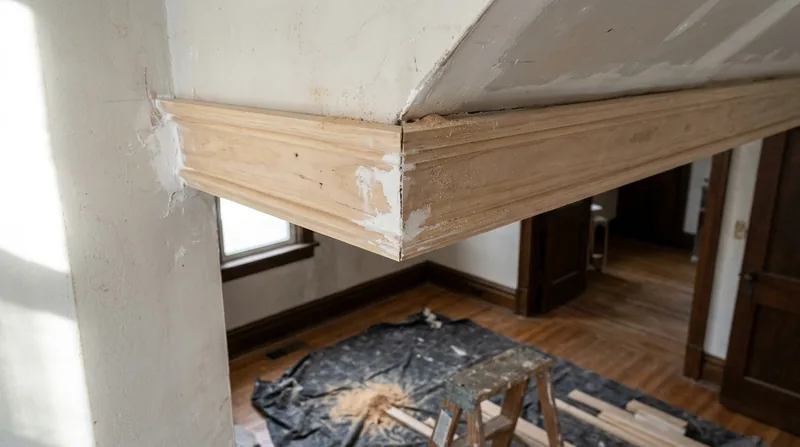




Crown Molding & Baseboard Installation in Aurora is more than decoration. In homes built from the 1850s through the early 1900s, period crown and baseboard profiles define the character of every room. Queen Anne Victorians on Pigeon Hill, Prairie-style foursquares in Riddle Highlands, and Craftsman bungalows across the Near Eastside all depend on trim details to hold their architectural identity. In newer subdivisions and ranch homes from the 1950s onward, clean baseboard and crown lines ground a room visually and protect walls from scuffs and moisture. We install crown molding and baseboard that stays tight through Aurora's cold, dry winters, when wood shrinks and coped joints can open if the work isn't precise. We match historical profiles where the home demands it, or run simple, modern lines where that serves the space better. Our carpenters cut coped joints by hand, measure and scribe every run, and finish with stain or paint that blends seamlessly into your existing trim.
Why Crown Molding and Baseboard Matter in Aurora's Historic and Modern Homes
Aurora's building stock spans 170 years of residential architecture, and trim carpentry is the language that ties each era together. In older homes, crown molding and baseboard are structural and aesthetic anchors, protecting plaster and drywall from impact and moisture while expressing the craftsmanship of their time. In newer homes, they anchor the eye and create visual proportion. Poorly fitted trim pulls away from walls as the house settles and wood moves seasonally, leaving gaps that collect dust and harbor moisture. Coped joints that aren't cut to match the profile will gap and look unfinished within a year or two of heating seasons.
- Coped corners hold tight through freeze-thaw cycles and seasonal wood movement when they are cut by hand to match the profile exactly.
- Scribing and fitting around door casings, window jambs and irregular walls takes time and skill, but the result is seamless trim that looks built-in.
- Stain and finish applied on-site after installation ensures color match and durability on all exposed edges and joints.
- Period profiles in Queen Anne, Prairie, and Craftsman homes restore architectural integrity and protect resale value in neighborhoods like the Tanner Historic District.
- Baseboard height and width anchor the proportions of a room and protect drywall from furniture, vacuum and water damage.
Getting the trim right the first time costs more upfront but avoids callbacks, sanding and refinishing later.
Local context: Aurora's Tanner Historic District and homes on Pigeon Hill above the Fox River feature original crown and baseboard in oak, poplar and walnut. These profiles are still available through specialty millwork suppliers, and we can match them or restore existing trim when it has been damaged by moisture or neglect. Homes in Riddle Highlands often retain their original Craftsman details, which require precision fitting to preserve their character.
For more on protecting and restoring trim in older homes, visit our page on Finish & Trim Carpentry.
How We Install Crown Molding and Baseboard in Aurora Homes
Our process starts with a site visit to measure, assess wall condition, and identify obstacles like electrical outlets, door casings, and irregular plaster or drywall. We order or mill trim to match your home's period or your chosen profile, and we plan each run to minimize joints and waste. On installation day, we locate studs and blocking, fasten trim securely with finish nails and construction adhesive, and cut every corner joint by hand to fit perfectly. We fill nail holes with wood filler or caulk, sand if needed, and finish with your choice of stain or paint.
- We measure every wall and opening, accounting for out-of-plumb walls and uneven floors that are common in Aurora's century-old homes.
- We cut coped joints for inside corners so that the profile of one piece follows the profile of the adjoining piece, creating a seamless fit that won't gap.
- We scribe trim to fit around door casings, window jambs, and irregular surfaces so no caulk is needed and the line reads clean and intentional.
- We fasten crown to blocking or to studs located with a stud finder, ensuring it holds solid through seasonal wood movement.
- We sand and finish on-site so stain or paint color is uniform and all edges are smooth and ready for use.
The result is trim that looks original to the home, fits precisely, and stays tight year after year.
Example: A 1920s Craftsman bungalow in Sugar Grove had original oak baseboard and crown that had been removed during a 1980s remodel. The homeowner wanted to restore the period profile and character. We sourced matching quarter-sawn oak, cut coped joints at all inside corners, and finished with satin polyurethane to match the home's original woodwork. The trim was installed in two days and looks as though it had never left.
Learn more about how we approach finish carpentry projects at our finish carpentry page.
Crown Molding and Baseboard Installation Methods
| Approach | Description | Best for |
|---|---|---|
| Hand-cut coped joints | Inside corners are cut by hand using a coping saw so that the profile of one piece follows the profile of the adjoining piece. | All inside corners in any home. Creates seamless appearance that won't gap. |
| Mitered joints | Both pieces are cut at 45-degree angles and joined at the corner. Requires precise measurement and finish work to hide the joint line. | Outside corners where coping is impractical, or in modern homes where the aesthetic is minimal and crisp. |
| Scribing to irregular surfaces | Trim is fitted to follow the exact contour of an out-of-plumb wall, uneven floor, or irregular door casing using a profile gauge or compass. | Older homes where walls have settled or shifted. Eliminates the need for caulk and creates an authentic, built-in appearance. |
| Period profile matching | Trim is sourced or milled to match the original profile of your home, whether Queen Anne, Prairie, Craftsman, or Victorian. | Historic homes and neighborhoods where architectural character is important to resale value and neighborhood character. |
| Modern clean-line baseboard | Simple profiles with minimal detail, run at standard heights, finished with paint or stain for a contemporary look. | Newer homes, ranch renovations, and modern interiors where visual simplicity is the goal. |
Crown Molding and Baseboard Installation Cost in Aurora: What to Expect
Crown molding and baseboard installation in Aurora typically starts at $450 for a single room or a straightforward run of baseboard in a new or recently renovated space. The actual cost depends on several factors. Linear footage is the primary driver: a 12-by-14-foot bedroom with 52 linear feet of baseboard costs less than a large living room or open-concept space with 100+ linear feet. The complexity of corners matters significantly. Coped inside corners take time and skill, while outside corners and runs with few obstacles cost less. The profile you choose affects material cost and installation time. A simple contemporary baseboard costs less than a detailed Victorian or Craftsman crown. Wall condition also factors in. Plumb, even walls in newer homes install faster than out-of-plumb walls in older homes, which require scribing. Access to studs or blocking behind the walls, and the need for any drywall repair or preparation, can add to the scope.
We recommend getting two or three estimates from different carpenters so you can compare approach, material quality, and timeline. A low bid often reflects corners being cut, either in joint quality or finish. Our estimate includes a site visit, material recommendations, and a realistic labor timeline. We do not charge for estimates, and you are under no obligation to book.
Cost example: A 1,200-square-foot ranch home in Batavia with 240 linear feet of new baseboard at 3.5 inches tall, simple profile, paint finish, and 8 inside corners typically runs $1,400 to $1,800 depending on wall condition and material choice. A 2,000-square-foot Craftsman home in Montgomery with 380 linear feet of period crown and baseboard, quarter-sawn oak, stain finish, and 12 coped corners typically runs $2,800 to $3,600.
Visit our pricing page for a detailed breakdown of costs by room and profile type.
Crown Molding and Baseboard Installation Near Me: What Aurora Homeowners Should Know When Hiring
When you hire a carpenter for crown molding and baseboard installation near Aurora, a few things matter more than price alone. First, ask whether the carpenter will cut coped joints by hand or use butt joints and caulk to hide gaps. Hand-cut coped joints stay tight through seasonal wood movement and look cleaner. Second, ask to see examples of previous work, particularly inside corners and transitions around door casings. Third, confirm that the carpenter is fully insured and carries liability coverage that protects your home in case of accident. Fourth, get the estimate in writing, including material specifications (species, profile, finish), linear footage, and labor scope. Fifth, ask about permits. In most cases, trim installation does not require a permit, but if your home is in a historic district or subject to HOA architectural review, check with your local building department or HOA before work begins. Finally, discuss the timeline. Most single-room projects take one to two days. Larger homes or complex profiles may take three to five days.
- Ask to see photographs or visit a completed project so you can assess the quality of coped joints and finish work.
- Request references from recent customers in Aurora, North Aurora, or Geneva so you can ask about their experience and satisfaction.
- Confirm that all materials will be delivered and stored on-site before work begins to avoid delays.
- Discuss color matching and finish compatibility with your existing trim, doors, and walls before installation starts.
- Agree on a payment schedule: typically one-third deposit, one-third at start, and one-third upon completion and inspection.
A good carpenter will answer your questions clearly, provide a detailed written estimate, and stand behind their work with a warranty on labor and materials.
Ready to discuss your crown molding and baseboard project? Contact us for a free estimate at (815) 916-4993. We respond within 24 hours and serve Aurora, North Aurora, Montgomery, Sugar Grove, Batavia, Geneva, St. Charles, Elburn, and surrounding areas.
Crown Molding & Baseboard Installation in Aurora: Pricing Guide
| Service | Price | Details |
|---|---|---|
| Baseboard installation, single room | Starting at $450 | Simple profile, paint finish, up to 50 linear feet with 4 inside corners included in base |
| Crown molding installation, single room | Starting at $550 | Standard profile, up to 50 linear feet, coped joints, paint or stain finish on-site |
| Period crown and baseboard, full room | Starting at $900 | Matched historical profile, hand-cut coped joints, scribing to irregular walls, stain or paint finish |
| Multi-room or whole-home installation | On estimate | Linear footage, profile type, wall condition, and finish determine final cost; site visit required for accurate quote |
| Travel and mobilization | Included | No separate charge for travel within Aurora and surrounding service area communities |
| Free estimate | No charge | Response within 24 hours, no obligation to book, includes site walk and material recommendations |
Indicative pricing, the exact cost depends on square footage, finish, and site access. Free personalized estimate within 24h at (815) 916-4993.


