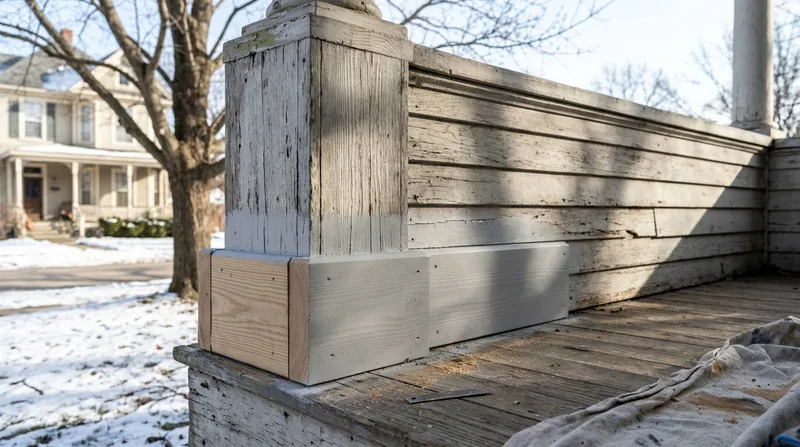




Aurora's historic neighborhoods, from the Italianate and Queen Anne homes of the Tanner Historic District to the Craftsman and Sears kit homes of Riddle Highlands and the brick bungalows of the Near Eastside, sit on the flat Fox River prairie where winter freeze-thaw cycles, ice dams, and spring snowmelt drive persistent moisture into wood. Summer humidity keeps sills, fascia, porch floors, and the lowest siding courses perpetually damp. Wood Rot and Dry Rot Repair in Aurora is not seasonal luxury but a routine structural necessity. We cut out every soft section, treat the sound wood around it, and rebuild with rot-resistant lumber, a lasting repair rather than filler or cosmetic patch. Since 2016, Aurora Carpentry has addressed wood rot in homes across the Fox Valley, from North Aurora to Geneva and Sugar Grove.
Why Wood Rot and Dry Rot Repair Matters in Aurora's Historic and Modern Homes
Aurora's building stock spans 150 years of residential construction, and wood is the common material across all of it. Ice dams in winter push meltwater behind fascia and into soffits; porch and deck floors hold standing water; and the sill plates and rim joists at the base of older homes sit inches above grade on the damp prairie soil. Carpenter ants nest in softened wood; subterranean termites occasionally establish colonies in untreated sills; and the simple fact of wet wood in a freeze-thaw climate means decay accelerates year after year. Addressing rot early keeps the structural frame sound and prevents expensive floor joist or subfloor replacement later.
- We identify soft wood by probing, distinguish between surface decay and deep structural loss, and cut back to sound material only.
- We treat the perimeter of the cavity with a wood preservative to arrest decay in the surrounding sound wood.
- We rebuild with pressure-treated lumber or naturally rot-resistant species such as redwood or cedar, depending on the location and exposure.
- We address the moisture source: improving drainage, repairing gutters, caulking gaps, or redirecting water away from the wood.
These steps restore structural integrity and prevent the rot from returning to the same spot.
Key info: Aurora's historic Tanner Historic District and Pigeon Hill neighborhoods house some of the oldest wood-frame homes in the region. Homes built before 1920 often have sill plates and rim joists that are original and vulnerable. A routine inspection can catch rot before it reaches the floor joists beneath.
For more context on moisture-related damage, see our guide to Termite Damage Repair, which often accompanies wood rot in damp conditions.
How We Repair Wood Rot and Dry Rot in Aurora: The Process
Wood rot repair is methodical and site-specific. We start by identifying the extent of the decay, determine whether the wood can be repaired or must be replaced, and plan the repair to restore strength and stop future moisture intrusion. For a porch floor that holds water or a fascia board softened by ice dam runoff, the approach differs; but the principle is the same: remove decay, treat sound wood, rebuild with durable material, and control moisture.
- We inspect the affected area by probing with a screwdriver or awl to locate the full extent of soft wood.
- We cut out all decayed material, creating clean edges back to sound wood and establishing a repair cavity.
- We apply a wood preservative to the perimeter and exposed grain of the remaining sound wood to prevent the decay from spreading.
- We rebuild the cavity with new lumber or repair material, fastening it securely and ensuring the grain and finish match the existing wood where visible.
- We seal the repair with exterior-grade caulk or finish to shed water and protect the new wood from future moisture.
- We address the root cause: regrade soil, repair or install gutters, caulk gaps, or improve ventilation to keep the wood dry.
The entire sequence preserves the existing structure and avoids unnecessary replacement.
Local example: A 1920s Craftsman home in Riddle Highlands with a covered porch had rot in the floor joists caused by a gutter downspout that drained directly onto the rim joist. We cut out the rotted joist section, sistered a new pressure-treated joist alongside it, and rerouted the downspout to drain away from the foundation. The porch floor was saved and the home remained structurally sound.
For extensive structural repairs involving floor joists or subfloors, see our full guide to Floor Joist and Subfloor Repair.
Wood Rot Repair Methods: Repair vs. Replace
| Approach | Description | Best for |
|---|---|---|
| Localized Repair | Cut out soft wood, treat perimeter, rebuild cavity with new lumber or epoxy-based repair material. | Surface and shallow rot in fascia, sills, porch trim, and door frames where structural load is light. |
| Sistering or Splicing | Attach a new pressure-treated joist or beam alongside a partially rotted member, sharing the load. | Floor joists, rim joists, and beams where decay is moderate and the existing member retains enough strength to share load during repair. |
| Complete Member Replacement | Remove the entire rotted beam, joist, or stud and install new lumber, properly sized and fastened to carry the original load. | Extensive rot affecting more than one-third of a structural member, or rot in load-bearing studs and beams where repair cannot restore adequate strength. |
| Moisture Control | Improve drainage, repair gutters and downspouts, caulk gaps, regrade soil, or add ventilation to eliminate the source of moisture. | All rot repairs. Addressing moisture is essential to prevent recurrence at the same location. |
Wood Rot and Dry Rot Repair Cost in Aurora: What to Expect
Wood rot repair in Aurora typically begins at $650 for a localized repair in accessible trim, fascia, or a small section of sill. The cost scales with the extent of decay, the structural importance of the member, whether moisture control work is needed, and the accessibility of the site. A porch floor repair or a sistered floor joist runs higher; a complete beam replacement or extensive subfloor work requires an on-site estimate. Pressure-treated lumber and naturally rot-resistant species cost more than standard framing lumber but last longer in damp conditions and justify the investment in a climate like Aurora's.
We recommend getting 2 or 3 estimates from local carpenters who will walk the job, identify the decay extent, and explain why they recommend repair or replacement. The lowest bid is not always the best value; a thorough contractor will explain the trade-off between immediate cost and long-term durability. Visit our pricing page for a detailed breakdown of common repair types and what drives the cost up or down.
Wood Rot and Dry Rot Repair Near Me: What to Look for When Hiring a Carpenter in Aurora
Hiring a local carpenter for wood rot repair is a structural decision, not a cosmetic one. The repair must be sound, the material must be appropriate to the climate and moisture exposure, and the moisture source must be addressed or the rot will return. Look for a carpenter who takes time to explain the decay, shows you the extent of the soft wood, and proposes repair before replacement when the wood justifies it. Ask for references from recent jobs in Aurora or nearby towns like North Aurora, Montgomery, or Batavia, and follow up with those homeowners about how the repair has held up.
- Verify that the carpenter is fully insured and carries general liability and workers compensation coverage for your protection.
- Ask whether the repair will require a permit; structural work such as sistering joists or replacing beams often does, and your local building department can advise on thresholds.
- Get written estimates from at least two carpenters that itemize the scope, material, and labor, and explain why they recommend repair or replacement.
- Check references and ask how the repair has performed over time, especially in homes with similar age and construction type.
- If your home is in a historic district such as the Tanner Historic District, confirm that the carpenter understands any design or material guidelines that apply to exterior repairs.
A thorough estimate and honest advice upfront save money and headache down the road.
Call us at (815) 916-4993 or visit our contact page to request a free, no-obligation estimate for your wood rot repair. We respond within 24 hours and can often schedule an inspection within a few days.
Wood Rot & Dry Rot Repair in Aurora: Pricing Guide
| Service | Price | Details |
|---|---|---|
| Localized rot repair (fascia, sill, trim, porch trim) | Starting at $650 | Includes cutting out decay, treating perimeter, rebuilding with new lumber or repair material, and sealing the repair to shed water |
| Floor joist or rim joist repair (sistering or splicing) | Starting at $1,200 | Includes removal of rotted section, installation of new pressure-treated joist, fastening, and addressing moisture source to prevent recurrence |
| Complete beam or major structural member replacement | On estimate | Requires on-site inspection to determine load-bearing requirement, sizing, and whether temporary shoring is needed during removal and installation |
| Moisture control (gutter repair, drainage improvement, caulking) | Starting at $400 | Addresses the root cause of rot by regrading soil, repairing downspouts, caulking gaps, or improving ventilation to keep wood dry and prevent future decay |
| Free estimate | No charge | We inspect the decay, explain the extent and cause, recommend repair or replacement, and provide a written quote with no obligation to book |
Indicative pricing, the exact cost depends on square footage, finish, and site access. Free personalized estimate within 24h at (815) 916-4993.


