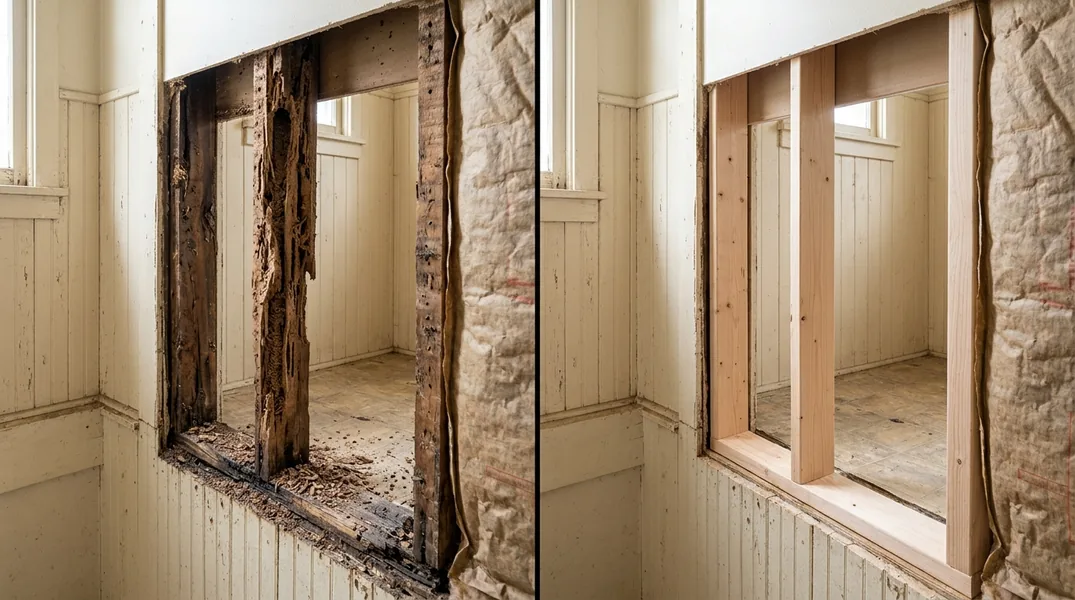
Understanding Ice Dam Damage vs Dry Rot
Winter in Aurora brings unique challenges to homeowners, and two of the most common structural threats are ice dam damage and dry rot. While both can compromise your home's integrity and lead to costly repairs, they develop through entirely different mechanisms and require different treatment approaches. Understanding the distinction between these two problems is the first step toward protecting your home and avoiding unnecessary expenses.
Ice dam damage occurs when snow melts on your roof, then refreezes at the eaves where temperatures are colder. This cycle creates a barrier that prevents water from draining off your roof properly, forcing moisture back under your shingles and into your attic, walls, and fascia. Dry rot, by contrast, is a fungal decay that attacks wood over time when it's exposed to moisture and poor ventilation. The confusion arises because both problems involve water, but the source, progression, and solution are fundamentally different. A homeowner who misdiagnoses their problem might spend money on the wrong repair, leaving the real issue unaddressed.
What Does Dry Rot Look Like and How to Spot It
Dry rot has a distinctive appearance that, once you know what to look for, becomes easier to identify. The affected wood typically develops a dark brown or grayish color and becomes brittle and crumbly. When you press on it with a screwdriver or similar tool, the wood will feel soft and may crumble or splinter easily. Unlike healthy wood, which resists pressure, dry rot wood often has a cube-like cracking pattern on the surface, as if the wood is breaking apart into small blocks. This visual signature is one of the most reliable ways to distinguish dry rot from other types of water damage.
The smell is another telltale indicator. Dry rot produces a musty, earthy odor that's quite distinctive once you've encountered it. You'll often notice it in basements, crawl spaces, or around windows and doors where moisture tends to accumulate. The fungus thrives in damp, poorly ventilated areas, so if you spot dry rot in one location, it's worth inspecting nearby wood carefully. Pay special attention to areas where wood meets concrete, around plumbing penetrations, and anywhere water might pool or remain trapped. If you suspect dry rot in your Aurora home, contact Aurora Carpentry for a free estimate so a professional can assess the full extent of the damage.
Identifying Ice Dam Damage and Fascia Damage
Ice dam damage presents differently and often appears suddenly after a winter thaw. You might notice water stains on your ceiling or walls, typically running along the outer edges of your home where the roof meets the fascia. The damage often appears in a horizontal line, and you may see peeling paint, water rings on drywall, or even active water dripping from your eaves during warm spells. Unlike dry rot, which develops over months or years, ice dam damage can occur within a single winter season and may become immediately apparent once temperatures rise.
Fascia damage from ice dams is particularly common because the fascia board sits right at the edge of the roof, directly in the path of backed-up water and ice. You might see the fascia board warped, discolored, or separating from the house. In severe cases, the wood becomes soft and spongy, which can eventually lead to dry rot if not addressed promptly. The key difference is timing: ice dam damage happens fast and is tied to weather events, while dry rot is a slow, progressive fungal infection. When water from an ice dam sits against fascia wood for weeks, it creates the perfect environment for dry rot to begin developing, which is why addressing ice dams quickly is so important for preventing long-term structural problems.
Wood Rot vs Water Damage: Key Differences
The term wood rot is sometimes used loosely to describe any wood damage from water, but there's an important distinction. True rot, including dry rot, is fungal decay that fundamentally changes the wood's structure at a cellular level. Water damage, on the other hand, refers to wood that has absorbed moisture and may be swollen, stained, or weakened, but hasn't yet succumbed to fungal infection. This difference matters because water-damaged wood can often be dried out and saved, while rotted wood must be removed and replaced.
When you have Wood Rot & Dry Rot Repair needs, the extent of fungal invasion determines your repair strategy. A board that's been wet for a few weeks might recover with proper drying and ventilation. A board that's been damp for months will likely have fungal spores established throughout, requiring complete replacement. This is why prompt action after discovering water intrusion is so critical. If you catch water damage early, you may avoid the progression to true rot, saving yourself significant expense and preventing the problem from spreading to other areas of your home's structure.
When to Call a Professional for Inspection and Repair
If you suspect either ice dam damage or dry rot in your home, professional evaluation is worth the investment. While some homeowners attempt DIY inspections, a trained carpenter can identify problems you might miss and assess whether damage is isolated or widespread. They can also determine whether your issue stems from ice dams, dry rot, poor ventilation, roof leaks, or a combination of factors. At Aurora Carpentry, we've helped countless homeowners in Aurora understand their wood damage and develop effective repair plans.
The cost of professional inspection is minimal compared to the expense of allowing rot to spread unchecked. What starts as a small soft spot on a fascia board can eventually compromise structural beams, floor joists, and the overall integrity of your home. If you notice any signs of moisture damage, discoloration, soft wood, or musty odors, don't wait. Call Aurora Carpentry at (815) 916-4993 to schedule your free estimate and get clarity on what you're dealing with.
Prevention Strategies for Aurora Homeowners
Preventing ice dam damage starts with proper attic insulation and ventilation. Heat escaping from your living space shouldn't warm your roof deck, which causes snow to melt and refreeze at the eaves. Ensuring adequate ventilation in your attic, keeping gutters clear of debris, and maintaining proper insulation levels are all proactive steps. Some homeowners also install heat cables along the roof edge or use ice dam prevention systems, though these are temporary measures rather than permanent solutions. The real fix is addressing the underlying ventilation and insulation issues that allow ice dams to form in the first place.
Preventing dry rot requires controlling moisture in your home's structure. This means keeping gutters clean so water drains away from your foundation, ensuring proper grading around your home, repairing leaky roofs and plumbing promptly, and maintaining adequate ventilation in basements and crawl spaces. If you live in an older home in Aurora, periodic inspections become even more important because aging roofs and foundations are more prone to water intrusion. Simple maintenance tasks like caulking around windows, sealing penetrations, and keeping your home's exterior in good repair go a long way toward preventing the moisture conditions that allow dry rot to establish itself.
Looking for a professional carpentry contractor in Aurora? Aurora Carpentry responds fast for all your carpentry needs.
Get a Free QuoteOur services: Wood Rot & Dry Rot Repair · Termite Damage Repair · Floor Joist & Subfloor Repair